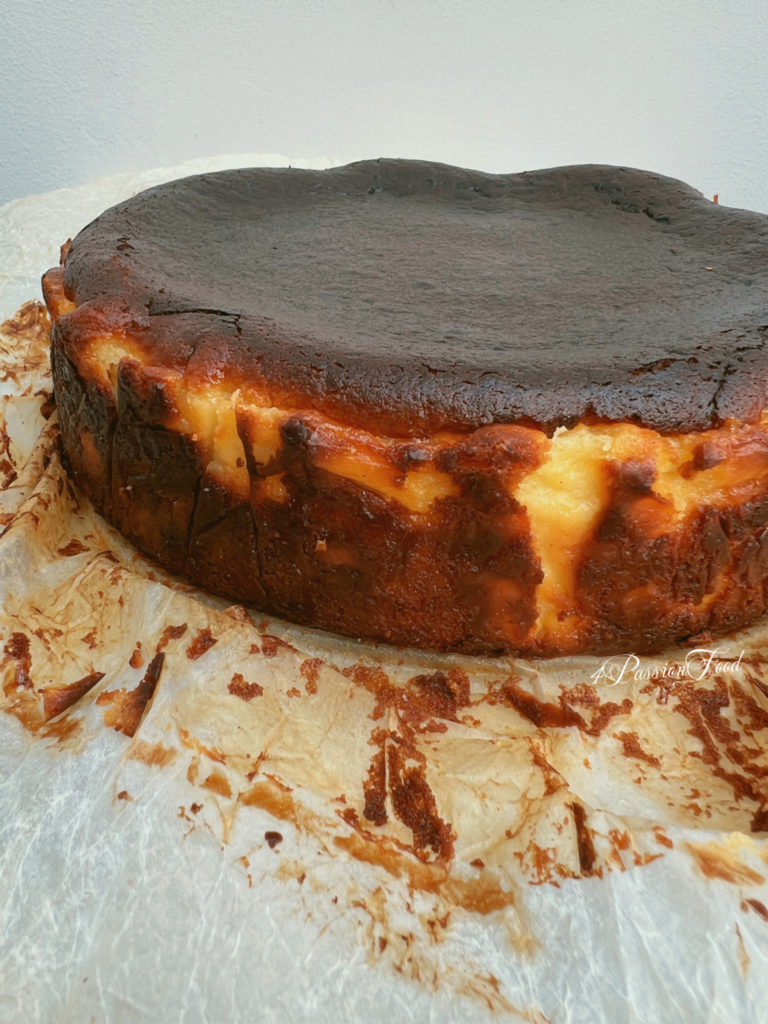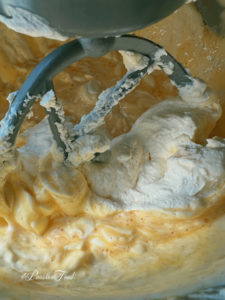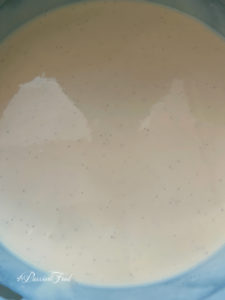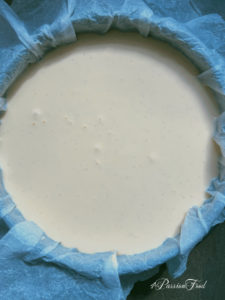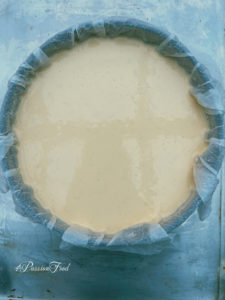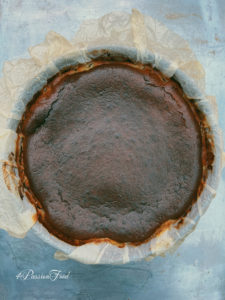
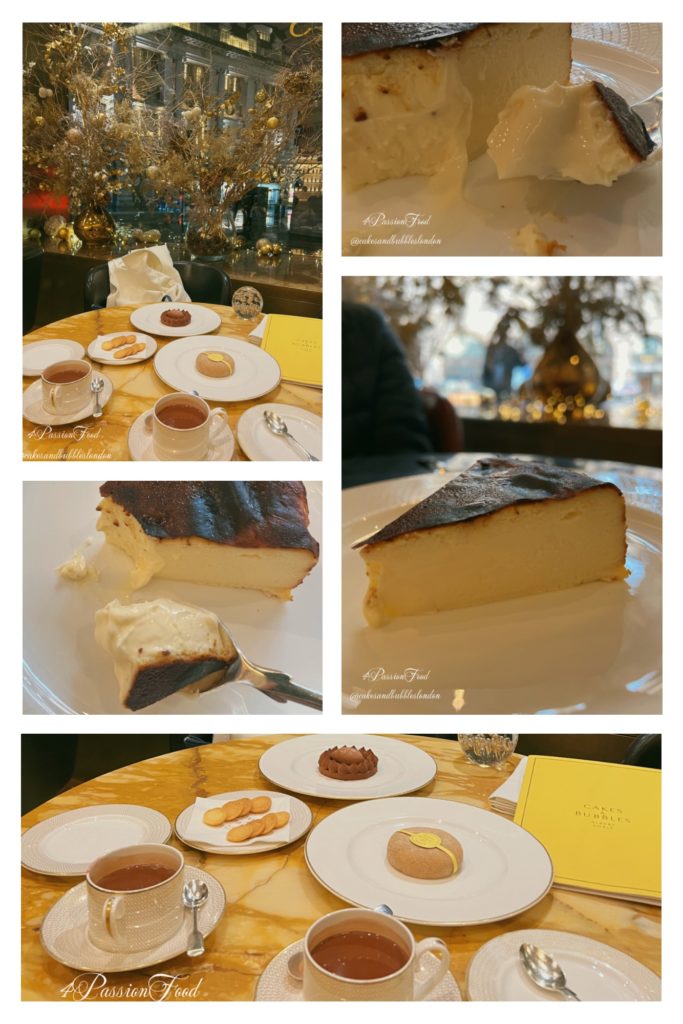
The first time I tasted this Basque cheesecake, or “Tarta de queso,” was in London at “Cakes and Bubbles,” run by the Spanish chef Albert Adria Acosta, one of the best chefs in the world known for his illusion desserts (trompe l’œil). His most famous dish is a cheesecake made with “Baron Bigod” Brie cheese, hazelnuts, and white chocolate, and it’s a real delight. I’ve never had a cheesecake that was so mousse-like, light, delicious, and complex at the same time, with a sweet yet subtly salty flavor and a strong nutty taste. It’s just perfect. It was, in fact, one of the best places to try a true Basque cheesecake, or as the Spanish call it, “Tarta de queso.” It was simply sublime, with lightly caramelized edges that were delicious and a creamy center that melted in my mouth.
I did some research to find a good recipe. I have to say that Basque cheesecake doesn’t require many ingredients, and all the recipes are quite similar.
What Do You Need to Make This Basque Cheesecake?
All ingredients should be at room temperature.
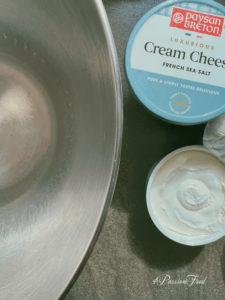
The main ingredient is, of course, cream cheese, like “Philadelphia.” I chose “Paysan Breton,” which has a slight saltiness. Unlike Philadelphia, it doesn’t contain any stabilizers.
I used liquid cream; some chefs add sour cream, yogurt, or mascarpone.
For the eggs, some use just the yolks, but I much prefer using whole eggs so that I don’t end up with leftover egg whites.
The amount of sugar varies from one recipe to another, depending on personal taste. The same goes for flavorings. You can leave your cheesecake plain or add vanilla, lemon zest, or any other zest you like.
Most chefs add flour, but I chose to keep it gluten-free, so I used cornstarch instead.
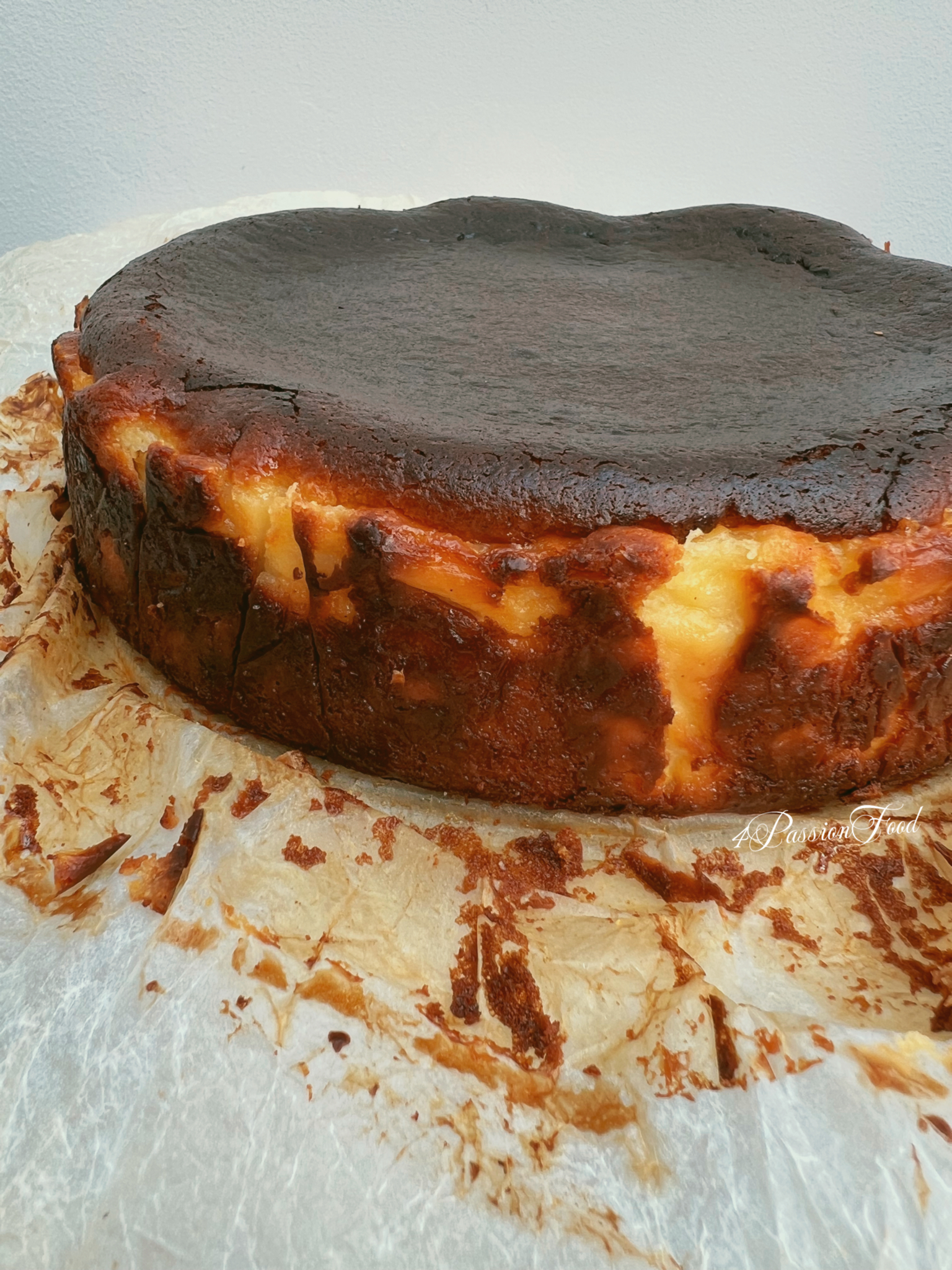
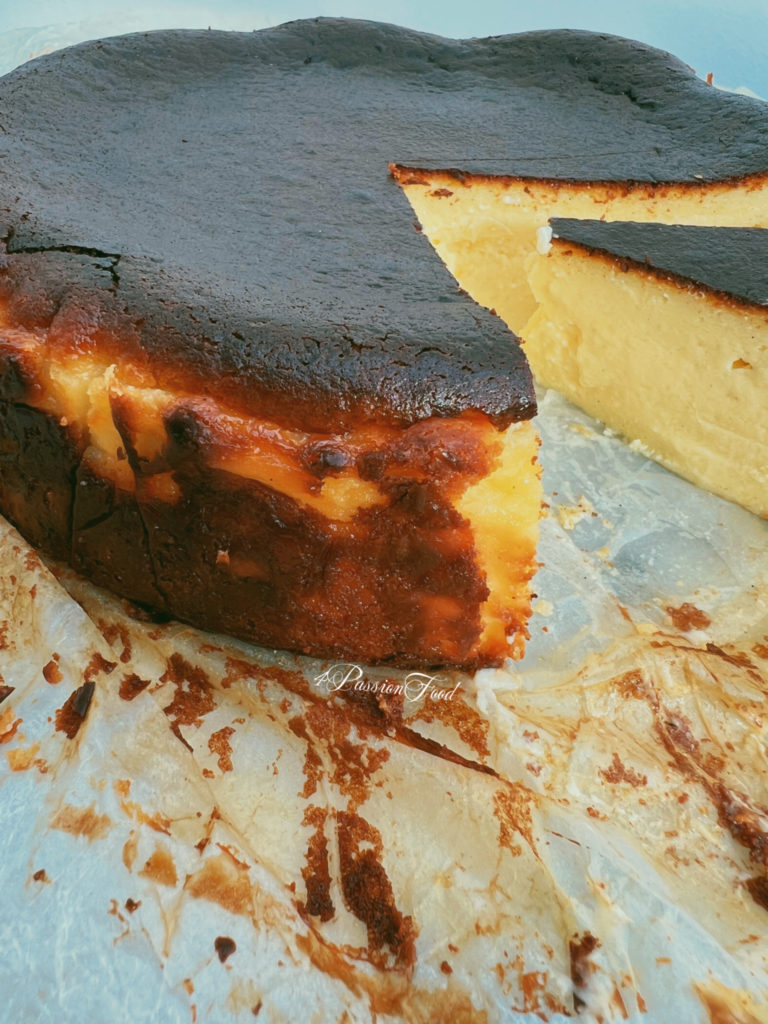
The texture of the cheesecake will change based on the baking temperature. Some recommend baking the cake at a low temperature, while others prefer cooking it at 240°C to 260°C to keep the center creamy. I opted for a preheated oven at 200°C. The cheesecake is done when the top is nicely golden, and the center jiggles like a flan.
Should you bake the cheesecake straight away or let it rest overnight before baking? That’s the question of the day! Some chefs recommend letting the batter sit overnight before baking it in a very hot oven the next day. This way, the cheesecake will keep a nicely creamy center.